यह sentence देखिए:
“Priya wants to become a doctor.
इसमें दो verbs हैं — “wants” और “become”। लेकिन क्या दोनों same type के हैं?
नहीं।
“wants” — Finite Verb है। “become” — Non-Finite Verb है।
और इन दोनों में फर्क समझना English grammar का सबसे important concept है — क्योंकि हर sentence में यह दोनों साथ होते हैं।
आज के इस article में एक बहुत simple 2-second test सीखेंगे जो किसी भी sentence में Finite और Non-Finite Verb को instantly पहचान लेगा। साथ में Non-Finite के तीनों types — Infinitives, Gerunds, और Participles — को Indian daily life के examples के साथ समझेंगे।
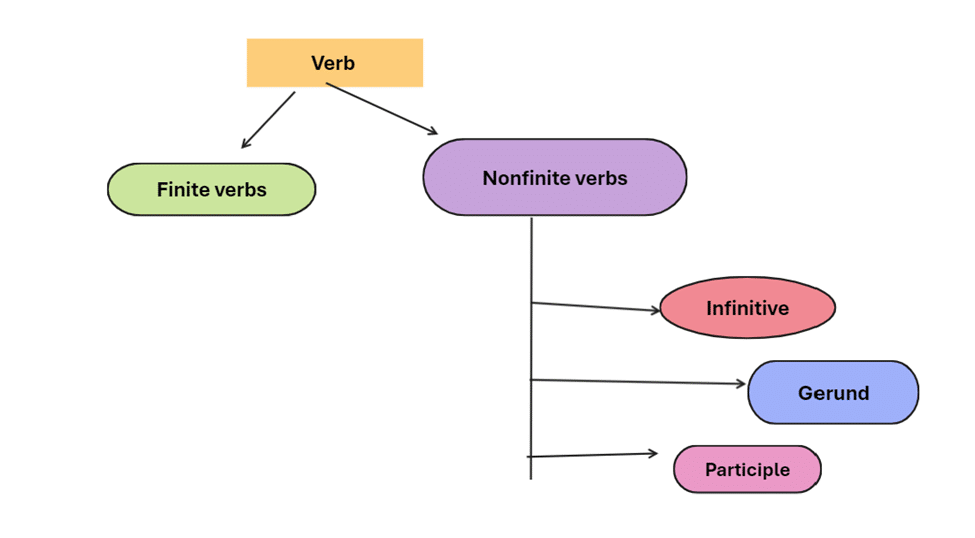
Finite Verb क्या होता है?
वो Verb जो Subject के साथ बदलती है
एक ही verb — Subject बदलने पर कैसे बदलती है
| Subject | Verb | Tense |
| I go to school. | go | Present |
| He goes to school. | goes | Present (3rd person singular) |
| They went to school. | went | Past |
| She will go to school. | will go | Future |
देखिए — “go” कैसे “goes”, “went”, “will go” बनती है। Subject और Tense के साथ verb change हो रही है। यही Finite Verb की पहचान है।
More Indian Examples
| Sentence | Finite Verb | क्यों Finite है? |
| Rahul studies every night. | studies | Subject (Rahul = 3rd person singular) के साथ agree करती है |
| We were playing cricket. | were playing | Past tense show करती है |
| She has finished her homework. | has finished | Present Perfect — subject agree |
| The train left at 9 AM. | left | Past tense |
| Do you understand? | Do | Question form — subject के साथ |
Nonfinite Verb क्या होता हैं ?
Nonfinite का मतलब होता हैं अनिश्चित, मतलब इसमें कुछ changinng आप नहीं ला सकते हैं |
चाहे आप Time बदले, Tense बदले, Gender बदले , subject बदले आप कुछ भी Changing नहीं ला सकते हैं |
जबकि –
I have to go.
अब यहाँ का जो verb हैं Go वो कभी नहीं बदलेगा, चाहे आप Number, Gender या Subject या कुछ भी बदल दें |
जैसे –
I have to go.
You have to go.
She has to go.
He has to go.
यहाँ पर देख रहे हो, go पर कोई भी Changing नहीं आ रहा हैं |
तो इसलिए यह सब “nonfinite verb” हैं |
- Verb के साथ
- Prepostion के साथ Object
- Subject Object Noun/Pronoun होता हैं |
- Model हमेशा V1 लेती हैं
- किसी सेंटेंस को Sentence कहलाने के लिए एक Finite Verb होना बहुत ज़रूरी हैं |
| Subject | Sentence | Non-Finite Verb |
| I | I have to go. | to go |
| You | You have to go. | to go |
| She | She has to go. | to go |
| He | He has to go. | to go |
| They | They have to go. | to go |

Some Example for Understanding Non-Finite Verb completely!
You need to work hard.
तो यहाँ पर Need जो हैं वो Finite Verb हैं जबकि “to work” Infinite हैं | तो need में Changing आएगा अगर Subject, Number, Tense etc बदला तो लेकिन to work में किसी भी हाल में Changning नहीं आने वाला हैं |
Non-Finite Verb के 3 Types
Non-Finite Verbs तीन types के होते हैं:
- Infinitives (to + verb / bare verb)
- Gerunds (verb + ing — noun की तरह)
- Participles (verb + ing / verb + ed — adjective की तरह)
Type 1 — Infinitives
Infinitive = Verb की base form।
दो तरह के होते हैं:
| Type | Form | Example |
| To-Infinitive | to + verb | to eat, to sleep, to work |
| Bare Infinitive | verb (without to) | eat, sleep, work |
To-Infinitive — सबसे common
To-Infinitive कहाँ use होती है:
As a Noun (Subject की तरह):
- To exercise daily is important. (Subject)
- To learn English was his dream. (Subject)
As a Noun (Object की तरह):
- Anjali wants to become an IAS officer.
- I decided to stay home.
- He refused to apologize.
As an Adverb (Purpose बताने के लिए):
- I came here to study.
- She worked hard to pass the exam.
- Rohan saved money to buy a phone.
As an Adjective (Noun describe करने के लिए):
- I have a lot of work to do.
- She has no time to waste.
Bare Infinitive — बिना “to” के
यह Modal Verbs (can, could, will, would, shall, should, may, might, must) के बाद आती है।
| Sentence | Bare Infinitive | Note |
| I can swim. | swim | “can” के बाद |
| She must complete this. | complete | “must” के बाद |
| They should study more. | study | “should” के बाद |
| Let him go. | go | “let” के बाद |
Type 2 — Gerund (verb + ing जब Noun की तरह काम करे)
Gerund = verb + ing form जो sentence में Noun की तरह काम करे।
यह सबसे ज्यादा confuse करता है — क्योंकि “-ing” form Present Participle में भी होती है। Difference यह है कि Gerund = Noun, Participle = Adjective/Adverb।
Gerund as Subject
- Swimming is good exercise.
- Reading books improves vocabulary.
- Cooking is my mother’s hobby.
- Studying at night suits me.
Gerund as Object
- Priya enjoys dancing.
- He avoids making mistakes.
- I finished writing the essay.
- She loves singing old Bollywood songs.
Gerund after Preposition
- He is good at solving problems.
- She is interested in learning French.
- Thank you for helping me.
- I am tired of waiting.
Gerund vs Present Participle — Confusion दूर करो
| Sentence | -ing word | Type | क्यों? |
| Swimming is fun. | Swimming | Gerund | Subject = Noun की तरह |
| She is swimming. | swimming | Participle | “is swimming” = continuous tense |
| Running is tiring. | Running | Gerund | Subject = Noun की तरह |
| The running water was cold. | running | Participle | “water” को describe करता है = Adjective |
One-line test for Gerund: क्या “-ing word” को किसी Noun से replace कर सकते हो?
- “Swimming is fun” → “Cricket is fun” — हाँ! → Gerund है।
- “She is swimming” → “She is cricket” — नहीं! → Participle है।
Type 3 — Participle
Participle = verb form जो Adjective की तरह काम करे।
दो types होते हैं:
| Type | Form | Examples |
| Present Participle | verb + ing | running, eating, crying |
| Past Participle | verb + ed / irregular | broken, written, stolen, gone |
Present Participle — Adjective की तरह
Noun के पहले:
- The crying baby was hungry.
- A running train is dangerous to board.
- He saw a burning building.
Participle Phrase के रूप में:
- Seeing the opportunity, Ankit applied immediately.
- Not knowing the answer, she kept quiet.
- Having finished the work, Riya went home.
Past Participle — Adjective की तरह
Noun के पहले:
- The broken chair was repaired.
- A stolen car was found near the station.
- The written exam was easy.
Noun के बाद:
- The letter written by her was beautiful.
- The food cooked by my mother is always delicious.
- The window broken by the ball was fixed.
Non-Finite Verbs sentence को छोटा कैसे बनाते हैं?
यह वह practical benefit है जो exams में directly काम आती है:
| Long Sentence | Short with Non-Finite | Non-Finite Used |
| I promise that I will wait. | I promise to wait. | To-Infinitive |
| I joined this company in order that I could gain experience. | I joined this company to gain experience. | To-Infinitive |
| He returned and he was smiling. | He returned smiling. | Present Participle |
| The use of toothpaste for the cleaning of teeth is common. | Cleaning teeth with toothpaste is common. | Gerund |
| After she finished her homework, she went to play. | Having finished her homework, she went to play. | Perfect Participle |
Finite Verb क्या है?
Verb जो subject, number, gender, time, tense के आधार पर बदलती है।
“I have to go” में “go” किस प्रकार की verb है?
Non-Finite verb
Verb के साथ “to” का क्या महत्व है?
“To” Infinitive बनाता है, जो verb के पहले आता है।
Finite और Non-Finite Verb में सबसे आसान फर्क क्या है?
सबसे simple test: Subject बदलो और देखो Verb बदली या नहीं। बदली → Finite। नहीं बदली → Non-Finite।
क्या एक sentence में Finite और Non-Finite दोनों हो सकते हैं?
बिल्कुल — यह बहुत common है। जैसे: She wants to learn English. — “wants” Finite है, “to learn” Non-Finite है।
Gerund और Present Participle में क्या फर्क है? दोनों “-ing” form होते हैं।
Gerund = Noun की तरह काम करता है। Swimming is fun. (Swimming = Subject = Noun) Present Participle = Adjective/Verb की तरह काम करता है। She is swimming. (swimming = continuous action का part) Test: क्या “-ing word” की जगह कोई Noun रख सकते हो? हाँ → Gerund। नहीं → Participle।
