Tense क्या होता है? (संक्षिप्त परिभाषा)
Tense (काल) क्रिया का वह रूप है जो किसी काम या घटना के समय — Past, Present या Future — की जानकारी देता है। English में कुल 12 Tenses होते हैं जो 3 मुख्य काल और 4 Aspects से मिलकर बनते हैं।
Tense = किसी भी समय (Past, Present, Future) में किसी action या state के बारे में information देना।
मतलब समय तीन रूप में हो सकता हैं |
और उस समय में किस तरीके का एक्शन हो रहा हैं, Continious Action हो रहा हैं, या और किसी तरीके का एक्शन हो रहा हैं,
तो कुल मिलाकर के बात यही है कि किसी भी समय पर, वो चाहे, Past, Present या Future हो, आप किसी भी तरीके का Action/Non Action का इनफार्मेशन से दें, वो Action चाहे, Continoues, Perfect, Continoue Perfect, Simple Process वाला Action हो या Non-Action हो,उसको Tense बोला जाता हैं | जैसे मान लीजिये कि समय Past में, Action, वह खा रहा था, मतलब एक्शन का Continous Process,तो यह Past Continious हो जाएगा | इस तरीके से हम Tense को परिभाषित कर सकते है|
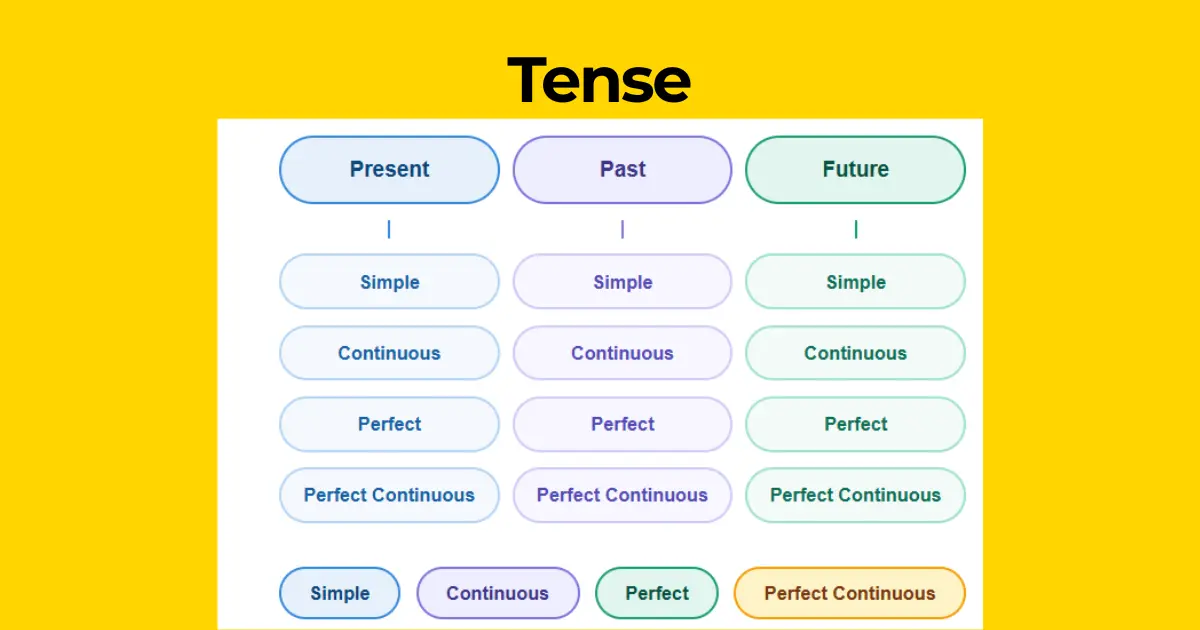
Table of Contents
3×4 Formula — 12 Tenses को एक नज़र में समझिये
| Aspect ↓ / Time → | Present | Past | Future |
| Simple | Present Simple | Past Simple | Future Simple |
| Continuous | Present Continuous | Past Continuous | Future Continuous |
| Perfect | Present Perfect | Past Perfect | Future Perfect |
| Perfect Continuous | Present Perfect Continuous | Past Perfect Continuous | Future Perfect Continuous |
Present Simple Tense क्या होता हैं?
Present Simple Tense क्या होता है? — Quick Answer
Present Simple Tense उन वाक्यों में use होता है जो daily habits, permanent facts, universal truths और routines को express करते हैं।
Hindi में पहचान: करता है, जाता है, खाता है, रहता है।
Formula: Subject + V1 | He/She/It → V1+s/es
यह टेंस, ऐसे काम को बताता हैं,जो आप रेगुलर करते हैं,जो एक तरीके से बोला जा सकता हैं कि यह परमानेंट होता हैं, जो आपका हैबिट होता हैं,
जैसे –
- Regular Habit/Routine — जो हमेशा होता है
- Permanent Fact — जो हमेशा सच है
- Universal Truth — scientific facts
- Scheduled Events — timetable, schedule
Present Simple Tense Formula:
- Positive: Subject + V1 (he/she/it के साथ V1+s/es)
- Negative: Subject + do/does not + V1
- Question: Do/Does + Subject + V1?
Hindi Signal: करता है, जाता है, खाता है, रहता है
Present Simple Tense Example Sentences with Hindi Meaning
| English Sentence | Hindi Meaning |
|---|---|
| I wake up at 6 AM every day. | मैं हर दिन सुबह 6 बजे उठता हूँ। |
| She drinks tea every morning. | वह हर सुबह चाय पीती है। |
| He goes to school by bus. | वह बस से स्कूल जाता है। |
| We eat lunch at 1 PM. | हम दोपहर 1 बजे खाना खाते हैं। |
| My father reads the newspaper daily. | मेरे पिताजी रोज अखबार पढ़ते हैं। |
| They play cricket every evening. | वे हर शाम क्रिकेट खेलते हैं। |
| My mother cooks food every night. | मेरी माँ हर रात खाना बनाती है। |
| I study English for one hour daily. | मैं रोज एक घंटे English पढ़ता हूँ। |
| He sleeps at 10 PM every night. | वह हर रात 10 बजे सो जाता है। |
| Rahul works at a government bank. | राहुल एक सरकारी बैंक में काम करता है। |
| She teaches Hindi in a primary school. | वह एक प्राथमिक विद्यालय में हिंदी पढ़ाती है। |
| I live in Patna, Bihar. | मैं पटना, बिहार में रहता हूँ। |
| The sun rises in the east. | सूरज पूर्व में उगता है। |
| Water boils at 100 degrees Celsius. | पानी 100 डिग्री सेल्सियस पर उबलता है। |
| The Earth revolves around the Sun. | पृथ्वी सूर्य के चारों ओर घूमती है। |
| Plants need sunlight to grow. | पौधों को बढ़ने के लिए धूप की जरूरत होती है। |
| Cows give milk. | गाय दूध देती है। |
| Honey bees make honey. | मधुमक्खियाँ शहद बनाती हैं। |
| Ice melts when temperature rises. | तापमान बढ़ने पर बर्फ पिघलती है। |
| I do not eat meat. | मैं मांस नहीं खाता हूँ। |
| She does not watch TV at night. | वह रात को टीवी नहीं देखती है। |
| He does not come to school on Sundays. | वह रविवार को स्कूल नहीं आता है। |
| They do not play football in the rain. | वे बारिश में फुटबॉल नहीं खेलते हैं। |
| My brother does not like spicy food. | मेरे भाई को मसालेदार खाना पसंद नहीं है। |
| She does not remember my name. | उसे मेरा नाम याद नहीं है। |
| Do you drink coffee every morning? | क्या आप हर सुबह कॉफी पीते हैं? |
| Does she go to the gym daily? | क्या वह रोज जिम जाती है? |
| Do they live in Delhi? | क्या वे दिल्ली में रहते हैं? |
| Does Priya teach in your school? | क्या प्रिया आपके स्कूल में पढ़ाती है? |
| Where do you live? | आप कहाँ रहते हैं? |
| What does she do every Sunday? | वह हर रविवार को क्या करती है? |
| Why do you study so hard? | आप इतनी मेहनत से क्यों पढ़ते हैं? |
| Who teaches you English? | आपको English कौन पढ़ाता है? |
| When does the school start? | स्कूल कब शुरू होता है? |
| My grandmother tells stories every night. | मेरी दादी हर रात कहानियाँ सुनाती हैं। |
| Farmers wake up before sunrise. | किसान सूरज उगने से पहले उठते हैं। |
| We celebrate Diwali every year. | हम हर साल दिवाली मनाते हैं। |
| My sister goes to college by bicycle. | मेरी बहन साइकिल से कॉलेज जाती है। |
| Our teacher always comes on time. | हमारे शिक्षक हमेशा समय पर आते हैं। |
| He always helps his classmates. | वह हमेशा अपने सहपाठियों की मदद करता है। |
| The train leaves for Mumbai at 8 PM. | ट्रेन रात 8 बजे मुंबई के लिए निकलती है। |
| She always prays before eating food. | वह खाना खाने से पहले हमेशा प्रार्थना करती है। |
| My dog barks at every stranger. | मेरा कुत्ता हर अजनबी पर भौंकता है। |
| She speaks three languages fluently. | वह तीन भाषाएँ धाराप्रवाह बोलती है। |
| People in our village respect elders. | हमारे गाँव में लोग बड़ों का सम्मान करते हैं। |
| Does your father work in a factory? | क्या आपके पिताजी एक फैक्ट्री में काम करते हैं? |
| Do you speak English at home? | क्या आप घर पर English बोलते हैं? |
| They run a successful business together. | वे मिलकर एक सफल व्यापार चलाते हैं। |
| Which subject do you like the most? | आपको कौन सा विषय सबसे ज्यादा पसंद है? |
| My uncle owns a small shop in the market. | मेरे चाचा की बाज़ार में एक छोटी दुकान है। |
Present Simple vs Present Continuous —सबसे Common Confusion:
| Present Simple | Present Continuous |
| I live in Canada. (Permanent) | I am living in Canada. (Temporary) |
| She teaches English. (Her job) | She is teaching a class now. (Right now) |
| He plays cricket. (Habit) | He is playing cricket. (At this moment) |
Present Continuous Tense
Present Continuous Tense क्या होता है? — Quick Answer
Present Continuous Tense उन वाक्यों में use होता है जो अभी इस moment में हो रही actions या temporary situations को बताते हैं।
Hindi में पहचान: कर रहा है, खा रहा है, पढ़ रही है, सो रहा है।
Formula: Subject + am/is/are + V-ing
Present Continuous Tense मतलब जो आप अभी कर रहे होते हैं और यह Temparary होता हैं,
- Right now हो रहा है
- Temporary situation — permanently नहीं
- Planned future (near future events)
- Changing/developing situation
Present Continuous Tense Formula:
- Positive: Subject + am/is/are + V-ing
- Negative: Subject + am/is/are not + V-ing
- Question: Am/Is/Are + Subject + V-ing?
Hindi Signal: कर रहा है, खा रहा है, सो रहा है
Present Continuous Tense Example Sentences with Hindi Meaning
| English Sentence | Hindi Meaning |
|---|---|
| The cat is sitting on my laptop again. | बिल्ली फिर से मेरे लैपटॉप पर बैठी है। |
| She is staring at the ceiling and thinking. | वह छत को देखते हुए सोच रही है। |
| He is pretending to sleep. | वह सोने का नाटक कर रहा है। |
| My mother is looking for her glasses again. | मेरी माँ फिर से अपना चश्मा ढूंढ रही है। |
| The neighbor’s dog is barking since an hour. | पड़ोसी का कुत्ता एक घंटे से भौंक रहा है। |
| I am waiting for the rain to stop. | मैं बारिश रुकने का इंतज़ार कर रहा हूँ। |
| She is not picking up my calls. | वह मेरे फोन नहीं उठा रही है। |
| He is walking very slowly today. | वह आज बहुत धीरे-धीरे चल रहा है। |
| The kids are making too much noise downstairs. | बच्चे नीचे बहुत शोर मचा रहे हैं। |
| I am thinking of changing my routine. | मैं अपनी दिनचर्या बदलने के बारे में सोच रहा हूँ। |
| She is learning to cook dal for the first time. | वह पहली बार दाल बनाना सीख रही है। |
| He is sitting quietly in the corner. | वह कोने में चुपचाप बैठा है। |
| The old clock on the wall is still ticking. | दीवार पर लगी पुरानी घड़ी अभी भी चल रही है। |
| I am trying to understand this chapter. | मैं इस अध्याय को समझने की कोशिश कर रहा हूँ। |
| She is wearing the same dress as yesterday. | वह कल वाली ही ड्रेस पहने हुए है। |
| My phone battery is dying again. | मेरे फोन की बैटरी फिर से खत्म हो रही है। |
| Are you even listening to what I am saying? | क्या तुम सुन भी रहे हो जो मैं बोल रहा हूँ? |
| The tea is getting cold on the table. | मेज़ पर चाय ठंडी हो रही है। |
| He is checking his phone every two minutes. | वह हर दो मिनट में अपना फोन चेक कर रहा है। |
| I am not complaining, I am just saying. | मैं शिकायत नहीं कर रहा, बस बोल रहा हूँ। |
| She is watching the same show for the third time. | वह वही शो तीसरी बार देख रही है। |
| The baby is trying to stand on its own. | बच्चा खुद खड़े होने की कोशिश कर रहा है। |
| My younger brother is eating without washing hands. | मेरा छोटा भाई बिना हाथ धोए खाना खा रहा है। |
| I am saving this mango for later. | मैं यह आम बाद के लिए बचा रहा हूँ। |
| She is writing something but not telling anyone. | वह कुछ लिख रही है लेकिन किसी को नहीं बता रही। |
| The electrician is still fixing the switch. | इलेक्ट्रीशियन अभी भी स्विच ठीक कर रहा है। |
| He is acting strange since morning. | वह सुबह से अजीब तरह से व्यवहार कर रहा है। |
| We are running out of sugar at home. | घर में चीनी खत्म हो रही है। |
| The crow is sitting on the same branch again. | कौआ फिर उसी डाल पर बैठा है। |
| I am counting the days until the holidays. | मैं छुट्टियों तक के दिन गिन रहा हूँ। |
| She is humming a song while cooking. | वह खाना बनाते हुए गुनगुना रही है। |
| The street outside is getting very noisy. | बाहर की सड़क बहुत शोरगुल वाली होती जा रही है। |
| He is not finishing his food again today. | वह आज फिर अपना खाना खत्म नहीं कर रहा। |
| I am just sitting here and enjoying the breeze. | मैं बस यहाँ बैठकर हवा का मज़ा ले रहा हूँ। |
| My dadi is telling the same story again. | मेरी दादी वही कहानी फिर से सुना रही हैं। |
| The shopkeeper is closing his shutter early today. | दुकानदार आज जल्दी अपना शटर बंद कर रहा है। |
| She is biting her nails out of tension. | वह टेंशन में अपने नाखून चबा रही है। |
| I am ignoring his messages on purpose. | मैं जानबूझकर उसके messages ignore कर रहा हूँ। |
| The pigeons are sitting on the roof as always. | कबूतर हमेशा की तरह छत पर बैठे हैं। |
| He is eating mithai secretly in the kitchen. | वह रसोई में छुपकर मिठाई खा रहा है। |
| She is nodding but not actually understanding. | वह सिर हिला रही है लेकिन असल में समझ नहीं रही। |
| I am drinking warm water these days for health. | मैं आजकल सेहत के लिए गुनगुना पानी पी रहा हूँ। |
| My sister is decorating her room all by herself. | मेरी बहन खुद अपना कमरा सजा रही है। |
| The clouds are moving very fast in the sky. | आसमान में बादल बहुत तेज़ी से चल रहे हैं। |
| He is laughing at something on his phone. | वह अपने फोन पर कुछ देखकर हँस रहा है। |
| I am missing home a lot these days. | मुझे आजकल घर की बहुत याद आ रही है। |
| She is folding the clothes and keeping them neat. | वह कपड़े तह करके करीने से रख रही है। |
| The dog is following me everywhere in the house. | कुत्ता घर में हर जगह मेरे पीछे-पीछे आ रहा है। |
| He is sitting on the terrace and watching the sunset. | वह छत पर बैठकर सूर्यास्त देख रहा है। |
| I am slowly understanding why this tense is useful. | मैं धीरे-धीरे समझ रहा हूँ कि यह tense क्यों ज़रूरी है। |
Present Perfect Tense क्या होता हैं ?
Present Perfect Tense क्या होता है? — Quick Answer
Present Perfect Tense उन वाक्यों में use होता है जहाँ action past में complete हो चुकी है लेकिन उसका result या effect अभी present में महसूस होता है।
Hindi में पहचान: चुका है, चुकी है, लिया है, दिया है, गया है, आया है।
Formula: Subject + have/has + V3 (Past Participle)
Present Perfect Tense का परिभाषा है कि एक्शन पास्ट में हो चूका हैं लेकिन इसका जो रिजल्ट हैं, वो प्रेजेंट का हैं|
ऐसे वाक्यों के अंत में चुका है, चुकी है, चुके हैं, लिया है, या लिया, दिया है, दिया, गया है, ली है, दी है, की है, हुआ हैं, हुई हैं, गया, आया, लिया, दिया,. किया
क्या बताता है:
- Unfinished time periods (today, this week, this year)
- Past में हुआ लेकिन present में effect है
- Life experience (कभी किया या नहीं)
- Recently completed action
Present Perfect Tense Formula:
- • Positive: Subject + have/has + V3 (Past Participle)
- • Negative: Subject + have/has not + V3
- • Question: Have/Has + Subject + V3?
Present Perfect vs Simple Past — सबसे Common Indian Mistake:
| Simple Past | Present Perfect |
| He went to market. (और वापस आ गया) | He has gone to market. (अभी वहाँ है) |
| I ate pizza yesterday. (Specific time) | I have eaten pizza before. (Experience) |
| She finished the work at 5 PM. (Specific time) | She has finished the work. (Abhi-abhi) |
Present Perfect Tense Example Sentences with Hindi Meaning
| English Sentence | Hindi Meaning |
|---|---|
| I have lost my keys again. | मैंने फिर से अपनी चाबियाँ खो दी हैं। |
| She has already left for the station. | वह पहले ही स्टेशन के लिए निकल चुकी है। |
| He has not eaten anything since morning. | उसने सुबह से कुछ नहीं खाया है। |
| I have just woken up. | मैं अभी-अभी उठा हूँ। |
| She has changed a lot this year. | वह इस साल बहुत बदल गई है। |
| We have run out of milk at home. | घर में दूध खत्म हो गया है। |
| He has not replied to my message yet. | उसने अभी तक मेरे message का जवाब नहीं दिया है। |
| I have been to that place only once. | मैं उस जगह सिर्फ एक बार गया हूँ। |
| She has cut her hair very short. | उसने अपने बाल बहुत छोटे कटवा लिए हैं। |
| My father has switched off his phone. | मेरे पिताजी ने अपना फोन बंद कर दिया है। |
| I have never tried eating pav bhaji before. | मैंने पहले कभी पाव भाजी नहीं खाई है। |
| He has just arrived from the village. | वह अभी-अभी गाँव से आया है। |
| She has not slept properly in three days. | उसने तीन दिनों से ठीक से नींद नहीं ली है। |
| The dog has chewed my slippers again. | कुत्ते ने फिर से मेरी चप्पल चबा दी है। |
| I have forgotten what I was going to say. | मैं भूल गया हूँ कि मैं क्या बोलने वाला था। |
| She has finally started learning English. | उसने आखिरकार English सीखना शुरू कर दिया है। |
| We have not visited our native village in years. | हम कई सालों से अपने गाँव नहीं गए हैं। |
| He has told this same joke three times today. | उसने आज यही चुटकुला तीन बार सुनाया है। |
| I have kept your share of food separately. | मैंने आपका खाने का हिस्सा अलग रख दिया है। |
| She has packed her tiffin and gone to school. | उसने अपना टिफिन पैक किया और स्कूल चली गई है। |
| My little brother has grown taller than me. | मेरा छोटा भाई मुझसे लंबा हो गया है। |
| He has not come home for two whole days. | वह दो पूरे दिनों से घर नहीं आया है। |
| I have saved some money for a rainy day. | मैंने मुश्किल वक्त के लिए कुछ पैसे बचाए हैं। |
| She has finally understood the formula. | उसने आखिरकार formula समझ लिया है। |
| The postman has already delivered the letter. | डाकिया पहले ही पत्र दे चुका है। |
| I have not seen this person before in my life. | मैंने इस इंसान को अपनी ज़िंदगी में पहले कभी नहीं देखा है। |
| He has eaten my share of food as well. | उसने मेरा खाने का हिस्सा भी खा लिया है। |
| She has written her name on my notebook. | उसने मेरी कॉपी पर अपना नाम लिख दिया है। |
| I have already seen this film twice. | मैं यह फिल्म पहले ही दो बार देख चुका हूँ। |
| My mother has made my favorite khichdi today. | माँ ने आज मेरी पसंदीदा खिचड़ी बनाई है। |
| He has broken the same cup for the second time. | उसने वही कप दूसरी बार तोड़ दिया है। |
| I have not stepped out of the house all day. | मैं पूरे दिन घर से बाहर नहीं निकला हूँ। |
| She has finally agreed to come to the function. | उसने आखिरकार समारोह में आने के लिए हाँ कर दिया है। |
| The electricity has gone off again. | बिजली फिर से चली गई है। |
| I have been waiting here since 9 in the morning. | मैं सुबह 9 बजे से यहाँ इंतज़ार कर रहा हूँ। |
| He has not apologized even once. | उसने एक बार भी माफी नहीं माँगी है। |
| She has kept the food warm for you. | उसने आपके लिए खाना गर्म रखा है। |
| I have never felt this tired before. | मैंने पहले कभी इतनी थकान महसूस नहीं की है। |
| My friend has moved to a new city. | मेरा दोस्त एक नए शहर में चला गया है। |
| He has filled water in all the buckets. | उसने सभी बाल्टियों में पानी भर दिया है। |
| She has not touched her phone since last night. | उसने कल रात से अपना फोन नहीं छुआ है। |
| I have made up my mind at last. | मैंने आखिरकार अपना मन बना लिया है। |
| The cat has knocked over the flower pot again. | बिल्ली ने फिर से गमला गिरा दिया है। |
| He has not changed at all after all these years. | इतने सालों बाद भी वह ज़रा भी नहीं बदला है। |
| She has stitched a new dress for the festival. | उसने त्योहार के लिए नई पोशाक सिल ली है। |
| I have realized my mistake. | मुझे अपनी गलती का एहसास हो गया है। |
| We have finally fixed the leaking tap. | हमने आखिरकार टपकता नल ठीक कर दिया है। |
| He has saved your contact under a funny name. | उसने आपका contact एक मज़ेदार नाम से save किया है। |
| She has not visited her parents in six months. | उसने छह महीनों से अपने माता-पिता से मिलने नहीं गई है। |
| I have kept all your things exactly where you left them. | मैंने आपकी सारी चीज़ें ठीक वहीं रखी हैं जहाँ आप छोड़ गए थे। |
Present Perfect Continuous क्या होता हैं ?
Present Perfect Continuous Tense में एक्शन Past में स्टार्ट हुआ और अभी भी Present में एक्शन चल रहा हैं | Started in past and still continuing in present
• Past में शुरू हुआ और अभी भी चल रहा है
• Duration emphasize करना
Present Perfect Continuous Tense Formula
• Positive: Subject + have/has been + V-ing
• Negative: Subject + have/has not been + V-ing
• Question: Have/Has + Subject + been + V-ing?
Present Perfect Continuous Tense Example Sentences with Hindi Meaning:
| English Sentence | Hindi Meaning |
|---|---|
| I have been studying since morning. | मैं सुबह से पढ़ता आ रहा हूँ। |
| She has been cooking for two hours. | वह दो घंटे से खाना बनाती आ रही है। |
| He has been sleeping since afternoon. | वह दोपहर से सोता आ रहा है। |
| I have been waiting here for an hour. | मैं एक घंटे से यहाँ इंतज़ार करता आ रहा हूँ। |
| She has been crying since last night. | वह कल रात से रोती आ रही है। |
| He has been eating my snacks secretly. | वह चुपचाप मेरे snacks खाता आ रहा है। |
| I have been telling him this for months. | मैं उसे यह महीनों से कहता आ रहा हूँ। |
| She has been ignoring me since morning. | वह सुबह से मुझे ignore करती आ रही है। |
| He has been coming late every single day. | वह हर दिन देर से आता आ रहा है। |
| I have been living here for five years. | मैं पाँच साल से यहाँ रहता आ रहा हूँ। |
| She has been wearing the same dupatta all week. | वह पूरे हफ्ते से वही दुपट्टा पहनती आ रही है। |
| He has been borrowing things and never returning them. | वह चीज़ें उधार लेता आ रहा है और कभी वापस नहीं करता। |
| I have been drinking warm water every morning. | मैं हर सुबह गुनगुना पानी पीता आ रहा हूँ। |
| She has been talking on the phone for hours. | वह घंटों से फोन पर बात करती आ रही है। |
| He has been fixing that same cycle for days. | वह दिनों से वही साइकिल ठीक करता आ रहा है। |
| I have been missing home a lot lately. | मैं काफी समय से घर को बहुत याद करता आ रहा हूँ। |
| She has been saving this sweet for later. | वह यह मिठाई बाद के लिए बचाती आ रही है। |
| He has been avoiding that topic since last week. | वह पिछले हफ्ते से उस विषय से बचता आ रहा है। |
| I have been forgetting small things these days. | मैं इन दिनों छोटी-छोटी चीज़ें भूलता आ रहा हूँ। |
| She has been writing in her diary every night. | वह हर रात अपनी डायरी में लिखती आ रही है। |
| He has been walking to the office to save money. | वह पैसे बचाने के लिए पैदल दफ्तर जाता आ रहा है। |
| I have been keeping quiet about this for too long. | मैं बहुत समय से इस बारे में चुप रहता आ रहा हूँ। |
| She has been feeding the stray dog every evening. | वह हर शाम उस आवारा कुत्ते को खाना खिलाती आ रही है। |
| He has been hiding his report card for two weeks. | वह दो हफ्तों से अपनी report card छुपाता आ रहा है। |
| I have been searching for my pen since morning. | मैं सुबह से अपनी कलम ढूंढता आ रहा हूँ। |
| She has been humming the same song all day. | वह पूरे दिन से वही गाना गुनगुनाती आ रही है। |
| He has been sitting in the same spot for hours. | वह घंटों से उसी जगह बैठा आ रहा है। |
| I have been reading the same page again and again. | मैं बार-बार वही पेज पढ़ता आ रहा हूँ। |
| She has been smiling but feeling sad inside. | वह मुस्कुराती आ रही है लेकिन अंदर से उदास है। |
| He has been putting off this work for days. | वह दिनों से यह काम टालता आ रहा है। |
| I have been living on maggi since last week. | मैं पिछले हफ्ते से मैगी खाता आ रहा हूँ। |
| She has been feeling uneasy since morning. | वह सुबह से बेचैन महसूस करती आ रही है। |
| He has been asking the same question every day. | वह हर दिन वही सवाल पूछता आ रहा है। |
| I have been using this old phone for three years. | मैं तीन साल से यही पुराना फोन इस्तेमाल करता आ रहा हूँ। |
| She has been taking care of everyone silently. | वह चुपचाप सबका ख्याल रखती आ रही है। |
| He has been watching the same show again. | वह फिर से वही show देखता आ रहा है। |
| I have been trying to sleep for an hour. | मैं एक घंटे से सोने की कोशिश करता आ रहा हूँ। |
| She has been watering the plants twice a day. | वह दिन में दो बार पौधों को पानी देती आ रही है। |
| He has been sharing his lunch with his friend daily. | वह रोज़ अपना लंच दोस्त के साथ बाँटता आ रहा है। |
| I have been wearing glasses since childhood. | मैं बचपन से चश्मा पहनता आ रहा हूँ। |
| She has been getting up early to study. | वह पढ़ाई के लिए जल्दी उठती आ रही है। |
| He has been talking about this trip for years. | वह सालों से इस यात्रा की बात करता आ रहा है। |
| I have been keeping everyone’s secrets. | मैं सबके राज़ रखता आ रहा हूँ। |
| She has been working on this project for months. | वह महीनों से इस project पर काम करती आ रही है। |
| He has been leaving the lights on every night. | वह हर रात बत्ती जलती छोड़ता आ रहा है। |
| I have been learning this tense since last week. | मैं पिछले हफ्ते से यह tense सीखता आ रहा हूँ। |
| She has been waiting for good news for a long time. | वह काफी समय से अच्छी खबर का इंतज़ार करती आ रही है। |
| He has been pretending everything is fine. | वह दिखाता आ रहा है कि सब ठीक है। |
| I have been thinking about this since yesterday. | मैं कल से इसके बारे में सोचता आ रहा हूँ। |
| She has been making rotis for the whole family every morning. | वह हर सुबह पूरे परिवार के लिए रोटियाँ बनाती आ रही है। |
| He has been coughing since last night. | वह कल रात से खाँसता आ रहा है। |
Past Simple क्या होता हैं ?
Past Simple Tense क्या होता है? — Quick Answer
Past Simple Tense उन वाक्यों में use होता है जो past में पूरी तरह complete हो चुकी actions को बताते हैं — जिनका present से कोई connection नहीं।
Hindi में पहचान: किया, गया, खाया, आया, पढ़ा, सोया।
Formula: Subject + V2 | Negative: did not + V1 | Question: Did + Subject + V1?
जो एक्शन पास्ट में हुआ और पास्ट में ही उसका काम ख़त्म हो गया, यह उस समय की बात करता है जो पहले हो चुकी है।
• Past में completed action — specific time पर
• Past की sequence of events
• Past habits (used to के साथ)
Past Simple Tense Formula
• Positive: Subject + V2 (Past form)
• Negative: Subject + did not + V1
• Question: Did + Subject + V1?
Past Simple Tense Example Sentences with Hindi Meaning :
| English Sentence | Hindi Meaning |
|---|---|
| I forgot my lunch box at home today. | मैं आज घर पर अपना लंच बॉक्स भूल गया। |
| She smiled when she saw the puppy. | जब उसने पिल्ले को देखा तो वह मुस्कुराई। |
| He did not say a single word at dinner. | उसने रात के खाने पर एक भी शब्द नहीं कहा। |
| My phone fell into the bucket of water. | मेरा फोन पानी की बाल्टी में गिर गया। |
| We sat under the tree and talked for hours. | हम पेड़ के नीचे बैठकर घंटों बातें करते रहे। |
| The cat drank all the milk from the bowl. | बिल्ली ने कटोरे का सारा दूध पी लिया। |
| I did not hear the alarm this morning. | मुझे आज सुबह अलार्म सुनाई नहीं दिया। |
| She wrote her name on the last page. | उसने आखिरी पेज पर अपना नाम लिखा। |
| He came back home without telling anyone. | वह बिना किसी को बताए घर वापस आ गया। |
| I spilled tea on my notebook by mistake. | मुझसे गलती से अपनी कॉपी पर चाय गिर गई। |
| The little girl hid behind the door. | छोटी बच्ची दरवाज़े के पीछे छुप गई। |
| My grandfather sat quietly near the window. | मेरे दादाजी खिड़की के पास चुपचाप बैठे रहे। |
| She did not open the door for a long time. | उसने काफी देर तक दरवाज़ा नहीं खोला। |
| The shopkeeper gave me wrong change. | दुकानदार ने मुझे गलत पैसे वापस किए। |
| I lost my pen on the very first day of school. | मैंने स्कूल के पहले ही दिन अपनी कलम खो दी। |
| He waved at me from across the street. | उसने सड़क के उस पार से मुझे हाथ हिलाया। |
| We did not sleep well that night. | हम उस रात अच्छे से नहीं सोए। |
| The bird sat on the windowsill for a minute. | चिड़िया एक मिनट के लिए खिड़की की चौखट पर बैठी। |
| My younger sister tore the important paper. | मेरी छोटी बहन ने वो ज़रूरी कागज़ फाड़ दिया। |
| I counted my savings three times. | मैंने अपनी बचत तीन बार गिनी। |
| She looked at me and quietly left the room. | उसने मुझे देखा और चुपचाप कमरे से चली गई। |
| The monkey stole bananas from the stall. | बंदर ने ठेले से केले चुरा लिए। |
| Did you lock the door before leaving? | क्या आपने जाने से पहले दरवाज़ा बंद किया? |
| He did not recognize me after so many years. | इतने सालों बाद उसने मुझे पहचाना नहीं। |
| I sat next to a stranger on the train. | मैं ट्रेन में एक अजनबी के बगल में बैठा। |
| The power cut came just before the exam. | परीक्षा से ठीक पहले बिजली चली गई। |
| She packed her bag without making any noise. | उसने बिना कोई आवाज़ किए अपना बैग पैक किया। |
| My dog ran out of the gate this morning. | मेरा कुत्ता आज सुबह गेट से बाहर भाग गया। |
| He ate the last piece of cake without asking. | उसने बिना पूछे केक का आखिरी टुकड़ा खा लिया। |
| I missed the bus by just two minutes. | मैं बस से बस दो मिनट चूक गया। |
| The child cried until his mother came. | बच्चा तब तक रोता रहा जब तक माँ नहीं आई। |
| She found a ten-rupee coin on the road. | उसे सड़क पर दस रुपये का सिक्का मिला। |
| We did not talk to each other for three days. | हमने तीन दिन तक एक-दूसरे से बात नहीं की। |
| My father fixed the broken fan himself. | मेरे पिताजी ने टूटा पंखा खुद ठीक किया। |
| She left without finishing her chai. | वह अपनी चाय खत्म किए बिना चली गई। |
| I wrote a sorry note and put it under his door. | मैंने माफी वाली पर्ची लिखकर उसके दरवाज़े के नीचे रखी। |
| The old lady fed the stray dogs every evening. | बूढ़ी अम्मा हर शाम आवारा कुत्तों को खाना खिलाती थीं। |
| He dropped his phone while taking a selfie. | सेल्फी लेते वक्त उसका फोन गिर गया। |
| My friend lied to me and I found out later. | मेरे दोस्त ने मुझसे झूठ बोला और मुझे बाद में पता चला। |
| I stood at the door and waited for twenty minutes. | मैं दरवाज़े पर खड़ा होकर बीस मिनट इंतजार करता रहा। |
| She cut her finger while chopping vegetables. | सब्जी काटते वक्त उसकी उंगली कट गई। |
| The kids hid the remote and nobody found it. | बच्चों ने रिमोट छुपा दिया और किसी को नहीं मिला। |
| He promised to return the book but never did. | उसने किताब वापस करने का वादा किया लेकिन कभी नहीं किया। |
| I clicked a photo before the moment passed. | मैंने वो पल गुज़रने से पहले एक फोटो ली। |
| She did not cry but her eyes became red. | वह रोई नहीं लेकिन उसकी आँखें लाल हो गईं। |
| My neighbor knocked on my door early morning. | मेरे पड़ोसी ने सुबह-सुबह मेरे दरवाज़े पर दस्तक दी। |
| He answered every question without hesitation. | उसने बिना हिचकिचाए हर सवाल का जवाब दिया। |
| I switched off the fan and sat in the heat. | मैंने पंखा बंद किया और गर्मी में बैठा रहा। |
| She nodded her head and walked away slowly. | उसने सिर हिलाया और धीरे-धीरे चली गई। |
| We shared one umbrella in the heavy rain. | हमने तेज़ बारिश में एक ही छाता साझा किया। |
Past Perfect Tense क्या होता हैं ?
Past Perfect Tense क्या होता है? — Quick Answer
Past Perfect Tense तब use होता है जब past में दो actions हों और एक action दूसरे से पहले complete हो चुकी हो। जो action सबसे पहले हुई — उसके लिए Past Perfect।
Hindi में पहचान: चुका था, चुकी थी, लिया था, दिया था, गया था।
Formula: Subject + had + V3
Past Perfect Tense का मतलब होता है, पास्ट का भी पास्ट, इसका मतलब है कि दो एक्शन पास्ट में हुआ और जो एक्शन सबसे पहले होता हुआ, जो फर्स्ट में हुआ , उसको Past Perfect Tense बोला जाता हैं|
जैसे –
The meeing started at 09:00 -मीटिंग शुरू हुआ 9 बजे |
We arrived at 10:00 – हम 10 बजे आये |
तो ये दोनों जो हैं, Past Simple का उदहारण हैं, अब इनको Past perfect Tense में करना हैं तो कैसे करना होगा ?
When we arrived, the meeting had started.
जब हम आएं, मीटिंग शुरू हो चुका था |
तो इस सेंटेंस का मतलब क्या हुआ, When we arrived, तो हम आयें 10 बजे,
the meeting had started. मीटिंग शुरू हुआ, 9 बजे, यानी मेरे आने से पहले मीटिंग शुरू हो चूका था ,
इसलिए इसको Past का Past बोला जाता हैं, मतलब कि दो एक्शन पास्ट में हुआ ठीक, जो एक्शन सबसे पहले होता हैं जो फर्स्ट में हुआ,उसको Past Perfect Tense बोला जाता हैं |
Key Rule: दो past actions हों → पहले हुई action = Past Perfect (had + V3), बाद में हुई action = Past Simple (V2)
Past Perfect Tense Formula
- Positive: Subject + had + V3
- Negative: Subject + had not + V3
- Question: Had + Subject + V3?
Past Perfect Tense Example Sentences with Hindi Meaning:
| English Sentence | Hindi Meaning |
|---|---|
| When I reached home, my mother had already slept. | जब मैं घर पहुँचा, माँ पहले ही सो चुकी थीं। |
| She had already eaten when I brought the food. | जब मैं खाना लाया तब वह पहले ही खा चुकी थी। |
| He had left the house before it started raining. | बारिश शुरू होने से पहले वह घर छोड़ चुका था। |
| By the time I woke up, everyone had gone out. | जब तक मैं उठा, सब बाहर जा चुके थे। |
| I had already locked the door when I remembered the keys were inside. | मुझे चाबियाँ अंदर रहने की याद तब आई जब मैं दरवाज़ा बंद कर चुका था। |
| She had switched off the fan before I could ask her to. | मेरे कुछ कहने से पहले उसने पंखा बंद कर दिया था। |
| The food had gone cold by the time he sat down to eat. | जब तक वह खाने बैठा, खाना ठंडा हो चुका था। |
| I had forgotten her birthday before she reminded me. | उसके याद दिलाने से पहले मैं उसका जन्मदिन भूल चुका था। |
| He had already seen that film so he fell asleep in the theatre. | उसने वह फिल्म पहले देख ली थी इसलिए वह सिनेमाघर में सो गया। |
| By the time the doctor arrived, the fever had come down a little. | डॉक्टर के आने तक बुखार थोड़ा कम हो चुका था। |
| She had hidden the sweets before the kids came home. | बच्चों के आने से पहले उसने मिठाइयाँ छुपा दी थीं। |
| I had barely sat down when the light went off. | मैं बमुश्किल बैठा ही था कि बिजली चली गई। |
| He had not eaten anything before he fainted. | बेहोश होने से पहले उसने कुछ नहीं खाया था। |
| The match had ended before we found a place to sit. | हमारे बैठने की जगह ढूंढने से पहले ही मैच खत्म हो चुका था। |
| She had kept my share of mango aside before anyone else took it. | किसी और के लेने से पहले उसने मेरे लिए आम का हिस्सा अलग रख दिया था। |
| I had just closed my eyes when my phone rang. | मैं अभी आँखें बंद ही किया था कि फोन बज उठा। |
| He had borrowed money from three people before asking me. | मुझसे माँगने से पहले वह तीन लोगों से पैसे ले चुका था। |
| By the time I reached the shop, it had already closed. | जब तक मैं दुकान पहुँचा, वह बंद हो चुकी थी। |
| She had read the whole story before the teacher even started. | शिक्षक के शुरू करने से पहले ही उसने पूरी कहानी पढ़ ली थी। |
| He had told everyone the news before I asked him to keep it secret. | मेरे मना करने से पहले वह सबको खबर बता चुका था। |
| I had never eaten golgappe that spicy before that day. | उस दिन से पहले मैंने कभी इतने तीखे गोलगप्पे नहीं खाए थे। |
| She had already cried and cleaned her face before anyone noticed. | किसी के नोटिस करने से पहले वह रोकर अपना चेहरा पोंछ चुकी थी। |
| The cat had knocked the glass off the table before I could catch it. | मेरे पकड़ने से पहले बिल्ली ने गिलास मेज़ से गिरा दिया था। |
| He had promised to come but had already made other plans. | उसने आने का वादा किया था लेकिन पहले ही दूसरी योजना बना चुका था। |
| I had put the umbrella back before I realized it would rain. | मैंने छाता वापस रख दिया था, फिर एहसास हुआ कि बारिश होने वाली है। |
| She had already given away my old books without asking me. | उसने बिना पूछे मेरी पुरानी किताबें दे दी थीं। |
| By the time I saved the file, the laptop had shut down. | जब तक मैं फाइल save करता, लैपटॉप बंद हो चुका था। |
| He had already eaten the last biscuit before I opened the packet. | मेरे पैकेट खोलने से पहले वह आखिरी बिस्कुट खा चुका था। |
| I had just started studying when the neighbor turned on loud music. | मैंने अभी पढ़ना शुरू ही किया था कि पड़ोसी ने तेज़ संगीत चला दिया। |
| She had washed the clothes but it rained before they could dry. | उसने कपड़े धो दिए थे लेकिन सूखने से पहले बारिश आ गई। |
| He had never seen snow before that trip to Shimla. | शिमला की उस यात्रा से पहले उसने कभी बर्फ नहीं देखी थी। |
| By the time we reached the platform, the train had started moving. | हमारे प्लेटफॉर्म पहुँचने तक ट्रेन चलने लगी थी। |
| I had charged my phone but someone had used it and drained the battery. | मैंने फोन चार्ज किया था लेकिन किसी ने use करके बैटरी खत्म कर दी थी। |
| She had never cooked alone before that evening. | उस शाम से पहले उसने कभी अकेले खाना नहीं बनाया था। |
| He had left his lunch box at home so he stayed hungry all day. | वह घर पर लंच बॉक्स छोड़ आया था इसलिए पूरे दिन भूखा रहा। |
| I had seen that look on her face before and I knew something was wrong. | मैंने उसके चेहरे पर वह भाव पहले देखा था और मुझे पता था कुछ गड़बड़ है। |
| The kids had already torn the gift wrap before the party started. | पार्टी शुरू होने से पहले ही बच्चों ने गिफ्ट का रैपर फाड़ दिया था। |
| She had kept some rotis aside for me before everyone else finished them. | सब के खत्म करने से पहले उसने मेरे लिए कुछ रोटियाँ बचाकर रखी थीं। |
| He had not spoken to his best friend for weeks before that phone call. | उस फोन कॉल से पहले वह हफ्तों से अपने절친 से बात नहीं किया था। |
| I had barely opened the door when the rain started pouring in. | मैंने दरवाज़ा अभी खोला ही था कि बारिश अंदर आने लगी। |
| By the time I reached the tea stall, he had already paid the bill. | मेरे चाय की दुकान पहुँचने तक उसने बिल चुका दिया था। |
| She had saved my number under a wrong name and got confused. | उसने मेरा नंबर गलत नाम से save किया था और उलझ गई। |
| He had walked all the way to school before realizing it was Sunday. | वह पैदल स्कूल तक पहुँच गया था, तब एहसास हुआ कि रविवार है। |
| I had never met anyone who woke up this early before I met her. | उससे मिलने से पहले मैंने कभी ऐसा कोई नहीं देखा था जो इतनी सुबह उठता हो। |
| She had already cried her heart out before anyone came to console her. | कोई दिलासा देने आए उससे पहले वह खूब रो चुकी थी। |
| The candle had melted completely before the power came back. | बिजली आने से पहले मोमबत्ती पूरी तरह पिघल चुकी थी। |
| He had rehearsed his speech so many times that he said it in his sleep. | उसने अपना भाषण इतनी बार rehearse किया था कि नींद में भी बोलने लगा। |
| I had packed everything only to realize I had forgotten my ticket. | मैंने सब कुछ pack कर लिया था, तभी पता चला ticket भूल गया। |
| She had ironed the shirt but he wore a different one anyway. | उसने शर्ट press की थी लेकिन उसने फिर भी दूसरी शर्ट पहनी। |
| By the time I apologized, the damage had already been done. | मेरे माफी माँगने तक नुकसान हो चुका था। |
| He had eaten so much at lunch that he skipped dinner completely. | उसने दोपहर में इतना खाया था कि रात का खाना बिल्कुल छोड़ दिया। |
Past Perfect Continuous Tense क्या होता हैं?
Past Perfect Continuous Tense का मतलब होता है कि एक आदत की तरह, अतीत में, कुछ टाइम तक,आप किसी काम करते आ रहे थे,
जैसे – मान लीजिये कि मैं मुंबई रहता था , 2000 से लेकर के 2020 तक, तो मैं बोलूँगा कि
मैं मुंबई रहता आ रहा था/मैं मुंबई रहते रहा था , I had been living in Mumbai
• Past में एक point तक लगातार चलता रहा था
• Habit की तरह, routine की तरह, past में लंबे समय तक
Past Perfect Continuous Tense Fourmula
• Positive: Subject + had been + V-ing
• Negative: Subject + had not been + V-ing
• Question: Had + Subject + been + V-ing?
Past Perfect Continuou Example Sentences with Hindi Meaning:
| English Sentence | Hindi Meaning |
|---|---|
| I had been waiting for two hours. | मैं दो घंटे से इंतज़ार करता आ रहा था। |
| She had been cooking since morning. | वह सुबह से खाना बनाती आ रही थी। |
| He had been saving money for months. | वह महीनों से पैसे बचाता आ रहा था। |
| I had been telling him to fix the tap. | मैं उसे नल ठीक करने को कहता आ रहा था। |
| She had been learning English for a year. | वह एक साल से English सीखती आ रही थी। |
| He had been skipping breakfast for weeks. | वह हफ्तों से नाश्ता छोड़ता आ रहा था। |
| I had been sleeping on the floor for days. | मैं कई दिनों से ज़मीन पर सोता आ रहा था। |
| She had been ignoring his calls for weeks. | वह हफ्तों से उसकी calls ignore करती आ रही थी। |
| He had been wearing the same shoes for two years. | वह दो साल से वही जूते पहनता आ रहा था। |
| I had been asking for a new phone for months. | मैं महीनों से नए फोन की माँग करता आ रहा था। |
| She had been crying quietly in her room. | वह अपने कमरे में चुपचाप रोती आ रही थी। |
| He had been lying about his marks all year. | वह पूरे साल अपने नंबरों के बारे में झूठ बोलता आ रहा था। |
| I had been carrying this guilt for years. | मैं सालों से यह अपराधबोध उठाता आ रहा था। |
| She had been waking up at 4 AM every day. | वह हर दिन सुबह 4 बजे उठती आ रही थी। |
| He had been borrowing money from friends. | वह दोस्तों से पैसे उधार लेता आ रहा था। |
| I had been eating at the same dhaba for three years. | मैं तीन साल से उसी ढाबे पर खाता आ रहा था। |
| She had been stitching clothes for the whole family. | वह पूरे परिवार के लिए कपड़े सीती आ रही थी। |
| He had been practicing that song for weeks. | वह हफ्तों से वही गाना बजाता आ रहा था। |
| I had been drinking too much tea every day. | मैं हर दिन बहुत ज़्यादा चाय पीता आ रहा था। |
| She had been feeding the stray dog since last month. | वह पिछले महीने से उस आवारा कुत्ते को खाना खिलाती आ रही थी। |
| He had been coming late to class every day. | वह हर दिन क्लास में देर से आता आ रहा था। |
| I had been living alone in that house for six months. | मैं छह महीने से उस घर में अकेला रहता आ रहा था। |
| She had been waiting at the bus stop for an hour. | वह एक घंटे से बस स्टॉप पर इंतज़ार करती आ रही थी। |
| He had been missing his village for a long time. | वह काफी समय से अपने गाँव की याद में रहता आ रहा था। |
| I had been noticing this problem for many days. | मैं कई दिनों से इस समस्या को नोटिस करता आ रहा था। |
| She had been hiding her report card for two weeks. | वह दो हफ्तों से अपनी report card छुपाती आ रही थी। |
| He had been coughing since last night. | वह कल रात से खाँसता आ रहा था। |
| I had been searching for my watch since morning. | मैं सुबह से अपनी घड़ी ढूंढता आ रहा था। |
| She had been talking to him on the phone for hours. | वह घंटों से उससे फोन पर बात करती आ रही थी। |
| He had been sitting in the dark for a long time. | वह काफी देर से अंधेरे में बैठा आ रहा था। |
| I had been trying to sleep but the noise was too much. | मैं सोने की कोशिश करता आ रहा था पर शोर बहुत था। |
| She had been saving this saree for a special occasion. | वह किसी खास मौके के लिए यह साड़ी बचाती आ रही थी। |
| He had been avoiding that lane since the incident. | वह उस घटना के बाद से उस गली से बचता आ रहा था। |
| I had been forgetting small things for many weeks. | मैं कई हफ्तों से छोटी-छोटी चीज़ें भूलता आ रहा था। |
| She had been writing in her diary every night. | वह हर रात अपनी डायरी में लिखती आ रही थी। |
| He had been walking to work to save money. | वह पैसे बचाने के लिए पैदल काम पर जाता आ रहा था। |
| I had been keeping quiet about it for too long. | मैं बहुत लंबे समय से इस बारे में चुप रहता आ रहा था। |
| She had been watering the plants twice a day. | वह दिन में दो बार पौधों को पानी देती आ रही थी। |
| He had been sharing his tiffin with his friend daily. | वह रोज़ अपना टिफिन अपने दोस्त के साथ बाँटता आ रहा था। |
| I had been wearing glasses since the age of ten. | मैं दस साल की उम्र से चश्मा पहनता आ रहा था। |
| She had been getting up early to study for months. | वह महीनों से पढ़ाई के लिए जल्दी उठती आ रही थी। |
| He had been talking about this trip for years. | वह सालों से इस यात्रा की बात करता आ रहा था। |
| I had been missing my school friends a lot. | मैं अपने स्कूल के दोस्तों को बहुत याद करता आ रहा था। |
| She had been keeping everyone’s secrets for years. | वह सालों से सबके राज़ रखती आ रही थी। |
| He had been working on that project for six months. | वह छह महीनों से उस project पर काम करता आ रहा था। |
| I had been reading the same page again and again. | मैं बार-बार वही पेज पढ़ता आ रहा था। |
| She had been smiling but was sad from inside. | वह मुस्कुराती आ रही थी लेकिन अंदर से उदास थी। |
| He had been putting off this work for days. | वह दिनों से यह काम टालता आ रहा था। |
| I had been living on maggi and bread for a week. | मैं एक हफ्ते से मैगी और ब्रेड पर ज़िंदगी चलाता आ रहा था। |
| She had been feeling uneasy since the morning. | वह सुबह से बेचैन महसूस करती आ रही थी। |
Past Continuous vs Past Perfect Continuous:
| Past Continuous | Past Perfect Continuous |
| Temporary action | Long-term habit/routine |
| I was telling Sohan to stop. (3-4 बजे के बीच एक बार) | I had been telling Sohan to stop. (बार-बार, 10 साल से) |
Future Simple Tense क्या होता हैं?
Future Simple Tense क्या होता है? — Quick Answer
Future Simple Tense उन वाक्यों में use होता है जो भविष्य में होने वाली actions, predictions, promises और spontaneous decisions को बताते हैं।
Hindi में पहचान: करेगा, जाएगा, खाएगा, आएगा, करूँगा।
Formula: Subject + will + V1
ऐसे काम जो आप भविष्य में करेंगे, उसको Future Simple Tense कहा जाता है
• Future में होगा — prediction, promise, decision
• Spontaneous decision (अभी decide किया)
• Offers और requests
Future Simple Tense Fourmula
• Positive: Subject + will + V1
• Negative: Subject + will not/won’t + V1
• Question: Will + Subject + V1?
Future Simple Tense Example Sentences with Hindi Meaning
| English Sentence | Hindi Meaning |
|---|---|
| I will wake up early tomorrow. | मैं कल सुबह जल्दी उठूँगा। |
| She will call you in the evening. | वह शाम को तुम्हें फोन करेगी। |
| He will not eat spicy food anymore. | वह अब मसालेदार खाना नहीं खाएगा। |
| I will try my best this time. | मैं इस बार पूरी कोशिश करूँगा। |
| She will wear the red suit tomorrow. | वह कल लाल सूट पहनेगी। |
| He will forget this in two days. | वह यह दो दिन में भूल जाएगा। |
| I will not repeat this mistake again. | मैं यह गलती दोबारा नहीं करूँगा। |
| She will finish the work by tonight. | वह आज रात तक काम पूरा कर लेगी। |
| He will come when he feels like it. | वह जब मन करेगा तब आएगा। |
| I will talk to him tomorrow morning. | मैं कल सुबह उससे बात करूँगा। |
| She will not listen to anyone. | वह किसी की नहीं सुनेगी। |
| He will sleep as soon as he sits on the sofa. | वह सोफे पर बैठते ही सो जाएगा। |
| I will eat whatever is made at home. | मैं घर पर जो भी बनेगा वह खाऊँगा। |
| She will cry when she sees this. | यह देखकर वह रो देगी। |
| He will ask for money again for sure. | वह दोबारा पैसे माँगेगा यह तय है। |
| I will not open the door this time. | मैं इस बार दरवाज़ा नहीं खोलूँगा। |
| She will make chai for everyone as usual. | वह हमेशा की तरह सबके लिए चाय बनाएगी। |
| He will blame me for this as always. | वह हमेशा की तरह इसके लिए मुझे दोष देगा। |
| I will save some money this month for sure. | मैं इस महीने ज़रूर कुछ पैसे बचाऊँगा। |
| She will not say sorry first. | वह पहले माफी नहीं माँगेगी। |
| He will take a nap after lunch as always. | वह हमेशा की तरह दोपहर के खाने के बाद सो जाएगा। |
| I will keep this a secret. | मैं इसे राज़ रखूँगा। |
| She will bring something for everyone from the trip. | वह यात्रा से सबके लिए कुछ न कुछ लाएगी। |
| He will not admit his mistake easily. | वह आसानी से अपनी गलती नहीं मानेगा। |
| I will miss this place a lot. | मुझे इस जगह की बहुत याद आएगी। |
| She will handle everything on her own. | वह सब कुछ खुद संभाल लेगी। |
| He will show up at the last moment as always. | वह हमेशा की तरह आखिरी वक्त पर आएगा। |
| I will think about it and tell you. | मैं सोचकर बताऊँगा। |
| She will not share her food with anyone. | वह किसी के साथ अपना खाना नहीं बाँटेगी। |
| He will fix it without anyone asking him. | वह बिना किसी के कहे इसे ठीक कर देगा। |
| I will write everything down so I don’t forget. | मैं सब लिख लूँगा ताकि भूलूँ नहीं। |
| She will pretend she never said that. | वह ऐसा दिखाएगी जैसे उसने कभी कुछ कहा ही नहीं। |
| He will eat the last piece without asking. | वह बिना पूछे आखिरी टुकड़ा खा जाएगा। |
| I will sit next to the window on the train. | मैं ट्रेन में खिड़की के पास बैठूँगा। |
| She will stay up all night before the exam. | वह परीक्षा से पहले पूरी रात जागेगी। |
| He will turn off the fan when he leaves. | जाते वक्त वह पंखा बंद कर देगा। |
| I will not waste food from today. | मैं आज से खाना बर्बाद नहीं करूँगा। |
| She will remember this day for a long time. | वह इस दिन को लंबे समय तक याद रखेगी। |
| He will take the window seat before anyone else. | वह सबसे पहले खिड़की वाली सीट ले लेगा। |
| I will return your book by Sunday. | मैं रविवार तक तुम्हारी किताब वापस कर दूँगा। |
| She will hum a song while doing the dishes. | वह बर्तन धोते हुए गुनगुनाएगी। |
| He will check his phone the moment he wakes up. | उठते ही वह अपना फोन चेक करेगा। |
| I will not say anything this time. | मैं इस बार कुछ नहीं बोलूँगा। |
| She will pack more than she actually needs. | वह ज़रूरत से ज़्यादा सामान pack करेगी। |
| He will ask the same question again tomorrow. | वह कल फिर वही सवाल पूछेगा। |
| I will keep the leftover food for tomorrow. | मैं बचा हुआ खाना कल के लिए रख लूँगा। |
| She will water the plants before going to bed. | वह सोने से पहले पौधों को पानी देगी। |
| He will not change no matter what you say. | तुम कुछ भी कहो वह नहीं बदलेगा। |
| I will feel better after a good sleep. | अच्छी नींद के बाद मैं बेहतर महसूस करूँगा। |
| She will smile and make everything feel okay. | वह मुस्कुराएगी और सब कुछ ठीक लगने लगेगा। |
Future Continuous Tense क्या होता हैं?
Future Continuous Tense का मतलब होता है कि कोई काम फ्यूचर में होगा, लेकिन एक टाइम तक कंटिन्यू होता रहेगा, मतलब Continue for a period, या Continue during a moment.
जैसे मान लीजिये कि मेरे को कोई काम करना हैं फ्यूचर में,
जैसे – At 02:30, I will be taking my english exam.
तो , मैं बोलूँगा कि मैं काम कर रहा होऊंगा , I will be working. मतलब कि फ्यूचर में एक पीरियड का बात हो रहा हैं, जो Continue होगा,
I will be working from 9-5 tommorow.
कल मैं 9-5 काम कर रहा होऊंगा
Future Continuous Tense Formula:
- Positive: Subject + will be + V-ing
- Negative: Subject + will not be + V-ing
- Question: Will + Subject + be + V-ing?
Future Continuous Tense Example Sentences with Hindi Meaning
| Sentence | Meaning |
| At 2:30, I will be taking my English exam. | उस specific time पर exam चल रही होगी |
| I will be working from 9 to 5 tomorrow. | कल 9-5 काम चल रहा होगा |
| She will be studying when you call her. | जब call करोगे, तब पढ़ रही होगी |
Future Perfect Tense क्या होता हैं?
Future Perfect Tense का मतलब होता है कि इसकि फ्यूचर में जो Action हैं,वो कम्पलीट हो चूका होगा,
जैसे मान लीजिये कि
राजू नाम कोई लड़का हैं,
कल वह अपने मामा के घर जा रहा हैं,|
तो, मैं कल उससे शाम को बात करूँगा, By the time you call him in the evening, he will have reached his uncle’s house.
मैं बोल सकता हूँ कि
वह अपने मामा के घर पहुँच चुका होगा | Raju will have reached his uncle’s house by evening.
Future Perfect Tense Formula:
• Positive: Subject + will have + V3
• Negative: Subject + will not have + V3
• Question: Will + Subject + have + V3?
Future Perfect Tense Example Sentences with Hindi Meaning:
| Will Have (Future Perfect) | Would Have |
| Future में complete होगा | Past में होता — लेकिन नहीं हुआ (conditional) |
| I will have eaten the food by 8 PM. | Virat would have eaten the food by now. (शायद खा चुका होगा — speculation) |
Future Perfect Continuous Tense क्या होता हैं?
Future Perfect Continuous Tense का मतलब होता है कि Future में एक specific point तक लगातार होता रहेगा
जैसे मान लीजिये कि आज 2026 हैं, अब आप अपना फ्यूचर प्लान बना रहे हैं,
तो,
अब आप सोच रहे हैं कि
मैं 2028 में मैं एक कंपनी ज्वाइन करूँगा, और 2030 तक मैं उस कम्पनी में काम करूँगा , तो इस बीच में
यानी 2028 से लेकर के, 2030 तक आप रेगुलर, कंटिन्यू, इस काम को करेंगे इसका क्या मतलब हुआ है? इसका मतलब हुआ कि
मैं उस कंपनी में काम करता रहा होऊंगा – I will have been working in that compnay.
Future Perfect Continuous Tense Formula:
- Positive: Subject + will have been + V-ing
- Negative: Subject + will not have been + V-ing
- Question: Will + Subject + have been + V-ing?
Future Perfect Continuous Tense Example Sentences with Hindi Meaning:
| By 2030, I will have been working in this company for 6 years. | 2030 तक 6 साल काम करता रहूँगा |
| She will have been teaching for 20 years by retirement. | Retirement तक 20 साल पढ़ाती रही होगी |
सभी 12 Tenses — Complete Formula Table
| Tense | Formula | Hindi Signal |
| Present Simple | S + V1/V1+s | करता है |
| Present Continuous | S + am/is/are + V-ing | कर रहा है |
| Present Perfect | S + have/has + V3 | कर चुका है |
| Present Perfect Continuous | S + have/has been + V-ing | करता आ रहा है |
| Past Simple | S + V2 | किया / था |
| Past Continuous | S + was/were + V-ing | कर रहा था |
| Past Perfect | S + had + V3 | कर चुका था |
| Past Perfect Continuous | S + had been + V-ing | करता आ रहा था |
| Future Simple | S + will + V1 | करेगा |
| Future Continuous | S + will be + V-ing | कर रहा होगा |
| Future Perfect | S + will have + V3 | कर चुका होगा |
| Future Perfect Continuous | S + will have been + V-ing | करता रहा होगा |
अक्सर पूछे जाने वाले सवाल (FAQs)
English में कितने Tenses होते हैं?
English में 12 Tenses होते हैं — 3 Times (Present, Past, Future) × 4 Aspects (Simple, Continuous, Perfect, Perfect Continuous) = 12। कुछ linguists कहते हैं technically 2 या 3 tenses हैं, लेकिन English as a Second Language के लिए 12 tenses system follow किया जाता है।
Present Perfect और Simple Past में क्या फर्क है?
Simple Past specific completed past action के लिए — specific time के साथ (yesterday, in 2020, last week)। Present Perfect past action के लिए जिसका present से connection है — specific time नहीं। “I ate pizza yesterday” (specific time) vs “I have eaten pizza before” (experience, no specific time)।
Past Perfect कब use करते हैं?
जब दो past actions हों और एक दूसरे से पहले हुई हो — पहले हुई action के लिए Past Perfect (had + V3), बाद में हुई के लिए Simple Past। “When I arrived, she had already left.” — पहले वो गई, फिर मैं आया।
“Will” और “Be Going to” में क्या फर्क है?
“Will” spontaneous decisions, promises, और random predictions के लिए। “Be going to” pre-planned decisions और evidence based predictions के लिए। “Look — it’s going to rain!” (clouds देखे) vs “I think it will rain tomorrow.” (general prediction)।
Hindi translation से Tense identify करना क्यों गलत है?
Hindi और English का Tense system same नहीं है। “चुका था” हमेशा Past Perfect नहीं — context पर depend करता है। “वो गया था” = “He went” (Simple Past) — “He had gone” नहीं। इसीलिए context और meaning से Tense decide करना जरूरी है, सिर्फ Hindi translation से नहीं।
Read This Also
Tense Chart and it’s Types & Rules
